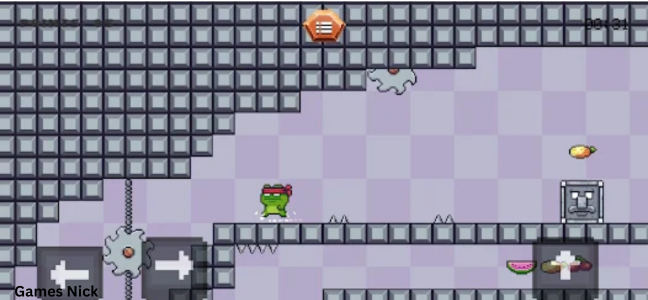
Pixel Journey – The Cozy Exploration and Crafting Adventure
The “Pixel Journey” will appeal to all fans of exploration, collecting resources in a cozy pixel world. It combines a cozy atmosphere and addictive gameplay. Reach the end and find out all the secrets!
Welcome to a world where every pixel tells a story. Developed by GamePush, Pixel Journey is a charming exploration and resource-gathering game that invites you to lose yourself in a beautifully crafted retro-style world. With simple controls, relaxing gameplay, and a sense of discovery around every corner, this title is perfect for players who want to unwind while still feeling a sense of purpose and progression.
This comprehensive guide covers everything you need to know about Pixel Journey: gameplay mechanics, tool upgrades, exploration tips, resource management, and strategies for uncovering every secret this cozy pixel world has to offer.
What Is Pixel Journey? An Overview
Pixel Journey is a cozy exploration and resource management game that combines the nostalgic aesthetic of classic pixel art with modern crafting and progression systems. You control a small character in a vibrant, hand-crafted world filled with resources to gather, tools to upgrade, and secrets to discover.
Unlike high-stakes survival games where monsters attack at night, Pixel Journey is designed to be relaxing and welcoming. There is no combat pressure, no hunger meters draining constantly, and no permadeath. You explore at your own pace, gather resources when you want, and upgrade your tools to reach new areas.
The game’s tagline—”Reach the end and find out all the secrets”—suggests that there is a conclusion, a final destination or achievement that marks the completion of your journey. But the path to that end is filled with side quests, hidden areas, and optional discoveries.
Why Pixel Journey stands out:
- Cozy pixel art aesthetic – Charming, nostalgic visuals
- Relaxing gameplay – No combat, no timers, no stress
- Progression system – Upgrade tools to access new resources
- Exploration focus – Discover hidden areas and secrets
- Crafting mechanics – Transform raw materials into useful items
- Play anywhere – Browser-based with no download required
Core Gameplay Mechanics

Controls
The game offers simple, intuitive controls across all devices:
| Platform | Control Method |
|---|---|
| Mobile (Phone/Tablet) | Swipe left-right on the screen |
| Desktop (Computer) | WASD keys or arrow keys |
Movement is smooth and responsive. Your character walks, runs, or swims (depending on terrain) as you guide them across the world.
The Goal: Explore, Collect, Upgrade
Pixel Journey has no single “win condition” shoved in your face. Instead, you set your own goals within the game’s systems:
Primary objectives:
- Explore the entire map (find every biome, hidden area, and secret)
- Collect all resource types
- Upgrade all tools to maximum level
- Discover the “end” of the journey (the final area or secret)
Secondary objectives (self-directed):
- Complete your collection (every item, every upgrade)
- Find all hidden treasures and Easter eggs
- Achieve 100% map completion
Resource Gathering
Resources are the lifeblood of Pixel Journey. They are scattered across the world, often hidden in plain sight or tucked away in hard-to-reach places.
Basic resource types:
- Wood – From trees (requires axe)
- Stone – From rocks (requires pickaxe)
- Ore – From mineral deposits (requires upgraded pickaxe)
- Berries/Fruit – From bushes (requires no tool)
- Herbs – From plants (requires no tool)
- Fish – From water (requires fishing rod)
Rare resource types:
- Crystals – From cave deposits (requires advanced pickaxe)
- Gems – Hidden in secret areas
- Artifacts – Buried or locked behind puzzles
Each resource has a purpose. Basic resources are used for crafting tools and structures. Rare resources are used for advanced upgrades or unlocking secrets.
Tool System

Tools are essential for gathering resources. You start with basic, low-level tools (or no tools at all, gathering by hand). As you progress, you can upgrade your tools:
| Tool | Basic Function | Upgraded Function |
|---|---|---|
| Axe | Chop wood | Chop faster, access hard wood |
| Pickaxe | Mine stone | Mine ore, crystals, gems |
| Fishing Rod | Catch fish | Catch rare fish |
| Hoe | Till soil | Prepare garden plots |
| Bucket | Collect water | Water crops |
To upgrade a tool, you typically need:
- A certain number of basic resources
- Sometimes a rare resource (crystal, gem)
- Access to a workbench or anvil (found in the world)
Upgraded tools are not just faster—they unlock access to new resource types. A basic axe cannot chop down a giant ancient tree. An upgraded axe can.
Crafting and Production
Pixel Journey includes a crafting system that allows you to transform raw resources into useful items:
Craftable items include:
- Tools (axes, pickaxes, fishing rods)
- Structures (bridges, ladders, workbenches)
- Consumables (food, potions)
- Decorations (purely cosmetic)
The crafting system is progressive. Early recipes are simple (wood + stone = basic axe). Later recipes are complex (refined metal + crystal + gem = legendary pickaxe).
Some items require multiple steps. For example:
- Mine ore
- Smelt ore into metal bars (requires furnace)
- Use metal bars + wood + leather to craft advanced pickaxe
Exploration and Map Design
The world of Pixel Journey is hand-crafted, not randomly generated. This means every tree, rock, and secret is placed deliberately by the developer.
Biomes you may encounter:
- Forest – Abundant wood, berries, basic wildlife
- Mountain – Stone, ore, caves
- Lake/River – Fish, water, riverside plants
- Desert – Rare minerals, heat effects (if implemented)
- Cave – Dark, requires light source, rich in ores and crystals
- Secret areas – Hidden behind waterfalls, inside tree hollows, under destructible rocks
Exploration is rewarded. If you see a suspicious patch of darker grass, try digging. If a waterfall hides a dark gap, try walking through it. The game encourages curiosity.
Tool Improvement and Production Chains
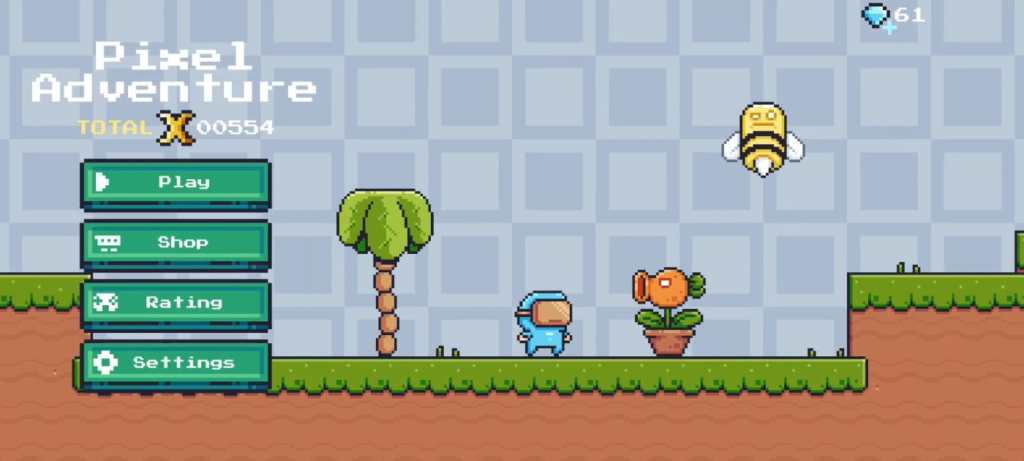
The “improve tools and production” aspect mentioned in the game’s description is a key loop:
- Gather basic resources by hand (slow)
- Craft basic tools (faster gathering)
- Use basic tools to gather more resources
- Upgrade tools (even faster gathering, access to new resources)
- Use new resources to craft advanced production buildings
- Automate or speed up resource processing
This progression loop is deeply satisfying. The player who spends time upgrading tools is rewarded with dramatically faster gathering, which enables even more upgrades.
Secrets and Endgame
The developer encourages players to “reach the end and find out all the secrets.” This implies that Pixel Journey has a defined conclusion—perhaps a final area, a boss (though the game has no combat, so maybe a puzzle boss), or a narrative ending.
Secrets may include:
- Hidden rooms with rare treasures
- Lore fragments explaining the world’s backstory
- Easter eggs referencing other games
- Alternate endings based on choices made during the journey
The developer also explicitly asks for player feedback: “If you have any comments or suggestions, please describe them and we will try to make improvements quickly!” This suggests the game is actively supported and may receive updates based on community input.
Strategies for Success
Beginner Strategies
1. Explore before gathering. Do not start chopping the first tree you see. Walk around first. Learn the map layout. Identify where resources are concentrated.
2. Prioritize tool upgrades. A basic axe is slow. An upgraded axe is fast. The time spent gathering resources for an upgrade pays for itself quickly.
3. Gather everything at first. You do not know what will be useful. Pick up wood, stone, berries, herbs—everything. You can discard items later if inventory fills.
4. Mark secret locations mentally. If you find a suspicious area but cannot access it yet (need upgraded tool, need to solve puzzle), remember it. Return later.
5. Talk to NPCs (if present). Many exploration games include NPCs who give hints, quests, or lore. Interact with every character you meet.
6. Check behind waterfalls. This is a classic game design trope. Waterfalls often hide caves or secret areas. Check every waterfall you find.
Advanced Strategies
1. Prioritize resource nodes that respawn. Some resources (berries, fish) respawn over time. Others (trees, rocks) may not. Focus on renewable resources when possible.
2. Create “base camp.” Store excess resources in a central location rather than carrying everything. You will not need 500 wood on a mining expedition. Leave it at base.
3. Upgrade in tiers. Do not try to skip from basic pickaxe to legendary pickaxe. The intermediate upgrades are necessary stepping stones. Craft them in order.
4. Explore edges first. The map edges (north, south, east, west boundaries) often contain secrets or rare resources. Fewer players explore edges thoroughly.
5. Use the environment. Need to cross water? Maybe there is a fallen tree already acting as a bridge. Need light in a cave? Maybe there are glowing mushrooms you can pick.
6. Take notes (real notes). For complex puzzles or multi-step crafting chains, write down what you need. Pen and paper are allowed.
Expert Strategies
1. Learn the production chains. Understand what each resource is used for. Then gather accordingly. Do not gather 100 wood if you need 50 stone for the next upgrade.
2. Optimize movement paths. If you need to travel between the forest (wood) and the mountain (stone) repeatedly, find the most efficient route. Clear obstacles. Build shortcuts.
3. Fish in specific spots. Different fish appear in different water bodies. Lake fish may be different from river fish. Experiment.
4. Use consumables strategically. Food heals or provides buffs. Potions may grant temporary abilities (night vision, speed boost). Use them when exploring dangerous or time-sensitive areas.
5. Check for secret entrances. Click or interact with every unusual tile. Some “walls” are actually destructible. Some “bushes” hide holes.
6. 100% completion strategies. To find everything, you may need to revisit areas after each tool upgrade. New areas become accessible with better tools.
7. Speedrun strategies (if applicable). For players who want to “reach the end” as fast as possible, memorize the location of key resources. Beeline to the best upgrade path. Ignore cosmetic or optional content.
Common Mistakes and How to Avoid Them
Mistake 1: Staying in one area too long
Players find a comfortable spot with abundant resources and never leave. You miss half the game. Explore.
Mistake 2: Upgrading tools in the wrong order
Upgrading the fishing rod before the pickaxe is useless if you need stone for the next area. Upgrade based on your immediate goals.
Mistake 3: Ignoring the map (if available)
If the game includes a map, use it. Mark locations. Refer to it when lost.
Mistake 4: Not reading signs/NPC dialogue
Hints are often hidden in text. Read everything.
Mistake 5: Carrying too many items
Inventory space may be limited. Store excess at base. Do not hoard 500 berries.
Mistake 6: Giving up on secrets
Some secrets are hard to find. If you cannot find them, ask the community (forums, Reddit). Or leave a suggestion for the developer to make the secret more discoverable.
Who Is Pixel Journey For? Audience and Suitability
| Player Type | Why They Will Enjoy It |
|---|---|
| Casual gamers | Relaxing, no combat, no time pressure |
| Exploration fans | Large hand-crafted world to discover |
| Collectors | Gather all resources, upgrade all tools |
| Pixel art lovers | Charming retro aesthetic |
| Kids (ages 6+) | Simple controls, no violence |
| Adults needing a break | Cozy atmosphere, stress-free |
| Mobile players | Swipe controls work perfectly |
Is It Suitable for Children?
Yes, for children aged 6 and up. Pixel Journey contains no violence, no scary imagery, no inappropriate content. The gameplay is about gathering resources and exploring. Children may need help reading some tooltips or crafting recipes, but the core mechanics are simple.
The game can help children develop:
- Spatial awareness – Navigating the map
- Planning skills – Deciding which tool to upgrade next
- Patience – Some resources require waiting or searching
Is It for Hardcore Gamers?
Not primarily. Pixel Journey is designed as a cozy, relaxing experience. Hardcore gamers may find it too easy or too slow. However, completionists who want to 100% the game (find every secret, upgrade every tool) will find dozens of hours of content.
Accessibility Features
- Simple controls (swipe or WASD/arrows)
- No time pressure
- Bright, high-contrast pixel art
- Text size may be small on mobile; zoom if needed
- Colorblind-friendly (resources distinguished by shape as well as color)
Why Play Pixel Journey in Your Browser?
Instant Access
No download, no installation, no account creation. Click the link and start playing within seconds.
Cross-Platform
Works on Windows, Mac, Chromebook, iOS, Android, and Linux. The same link works everywhere.
No Storage Space
The game runs entirely in your browser. It does not take up space on your hard drive or mobile device.
Completely Free
The full game is free to play. No in-app purchases are required to access any features or areas.
Ad-Supported but Fair
The embedded version may show short ads, but these appear between sessions, not during active gameplay.
Progress Saves Automatically
Your progress is saved in your browser. Close the game, return a week later, and you will be exactly where you left off.
Frequently Asked Questions (FAQs)
1. Is Pixel Journey really free to play?
Yes, Pixel Journey is completely free. You can play the full game without spending any money. The embedded version may include occasional ads, but these are brief and do not block gameplay.
2. Do I need to download anything to play?
No download or installation is required. Pixel Journey is an HTML5 browser game that runs directly in your web browser. Just click and play.
3. Can I play on my phone or tablet?
Yes. The game is fully compatible with iOS and Android mobile devices. On mobile, you control your character by swiping left-right on the screen. The default orientation is landscape (800×600 resolution).
4. How do I upgrade my tools?
To upgrade a tool, you typically need:
- Basic resources (wood, stone)
- Sometimes rare resources (crystals, gems)
- Access to a workbench or anvil (found in the world)
- Sufficient progress (some upgrades require reaching new areas)
Check the crafting menu or talk to NPCs for specific upgrade requirements.
5. What are the secrets in Pixel Journey?
The game encourages players to “reach the end and find out all the secrets.” Secrets may include hidden areas, rare treasures, lore fragments, Easter eggs, or alternate endings. Discovering them is part of the fun—so no spoilers here!
6. How long does it take to complete Pixel Journey?
Playtime varies dramatically by playstyle:
- Casual exploration: 5-10 hours
- Completionist (100% secrets): 15-25 hours
- Speedrun (just reaching the end): 2-4 hours (if you know where to go)
The game is not padded with filler. Every area has a purpose.
7. Is there combat in Pixel Journey?
No. Pixel Journey is a combat-free experience. There are no enemies to fight, no health bars to manage (aside from environmental hazards like drowning or falling). The focus is entirely on exploration, gathering, and crafting.
8. Can I play with a controller?
The browser version may not support controllers directly. However, you can use controller mapping software to map controller buttons to WASD/arrow keys. Check your specific setup.
9. Does the game have a map?
Some versions include a minimap or full map. Others rely on environmental navigation. If you are lost, look for landmarks (unique trees, rock formations, bodies of water) to orient yourself.
10. What happens when I reach the end?
When you “reach the end” (the final area or secret), the game may display a credits screen, a congratulations message, or unlock a “New Game+” mode. The developer encourages players to share their experience by leaving a review and comments.
11. Can I give feedback to the developer?
Yes. The game description explicitly states: “If you have any comments or suggestions, please describe them and we will try to make improvements quickly!” Look for a feedback button in the game menu or leave a comment on the hosting platform.
12. Are there multiple endings?
The game’s description suggests there may be secrets to uncover, possibly including multiple endings. Some endings may require specific choices or discoveries. Explore thoroughly.
13. What is the best tool to upgrade first?
Most players recommend upgrading the pickaxe first. Stone and ore are needed for almost every other upgrade. A better pickaxe gathers these faster, accelerating all future upgrades.
14. Can I reset my progress and start over?
Yes. You can typically clear your browser’s saved data for the game to reset progress. However, check the game menu first—some versions include a “New Game” button that resets without clearing browser data.
15. Why is the game called Pixel Journey?
The name reflects:
- Pixel – The retro pixel art aesthetic
- Journey – The focus on exploration, progression, and reaching an ending
It is a journey through a pixel world.
The Cozy Game Revolution
Pixel Journey belongs to a growing genre of “cozy games”—titles designed to be relaxing, low-stress, and welcoming. Unlike competitive shooters or high-difficulty platformers, cozy games prioritize atmosphere, exploration, and player agency over challenge.
Why cozy games are popular:
- Stress relief – After a long day, a cozy game soothes rather than frustrates
- Accessibility – Players of all skill levels can enjoy them
- Creative expression – Cozy games often include customization, crafting, and decoration
- Nostalgia – Pixel art evokes childhood memories of classic games
Pixel Journey fits perfectly into this genre. It asks nothing of you except curiosity. It rewards exploration with beauty and secrets. It progresses at your pace, not the game’s.
Conclusion: Your Cozy Pixel Adventure Awaits
Pixel Journey is a gentle reminder of why video games can be wonderful. Not every game needs to be about combat, competition, or high scores. Sometimes, a game can simply be a place to wander, to gather, to build, and to discover.
The pixel art is charming. The controls are simple. The world is filled with secrets waiting to be found. And the end—whatever it is—promises satisfaction.