Simon Says Challenge -This Classic Listening Game.
Simon Says Challenge is a fun game that helps in exercising listening skills. This game is fairly easy but it can quickly turn into a challenge especially if playing in a large group. Although this game goes by many names worldwide, the fun basic rules tend to remain the same. Follow my steps and you are in the game. Have fun playing.
Welcome to the definitive guide for Simon Says Challenge, a timeless game that has entertained children and adults for generations. Whether played in a classroom, at a party, or through this digital adaptation, Simon Says remains one of the most beloved listening and reaction games ever created. It is simple enough for toddlers yet challenging enough to trip up adults—especially in large groups.
This comprehensive guide covers everything you need to know about Simon Says Challenge—the classic rules, common variations, strategies for winning, cognitive benefits, and why this game has stood the test of time.
What Is Simon Says Challenge? An Overview
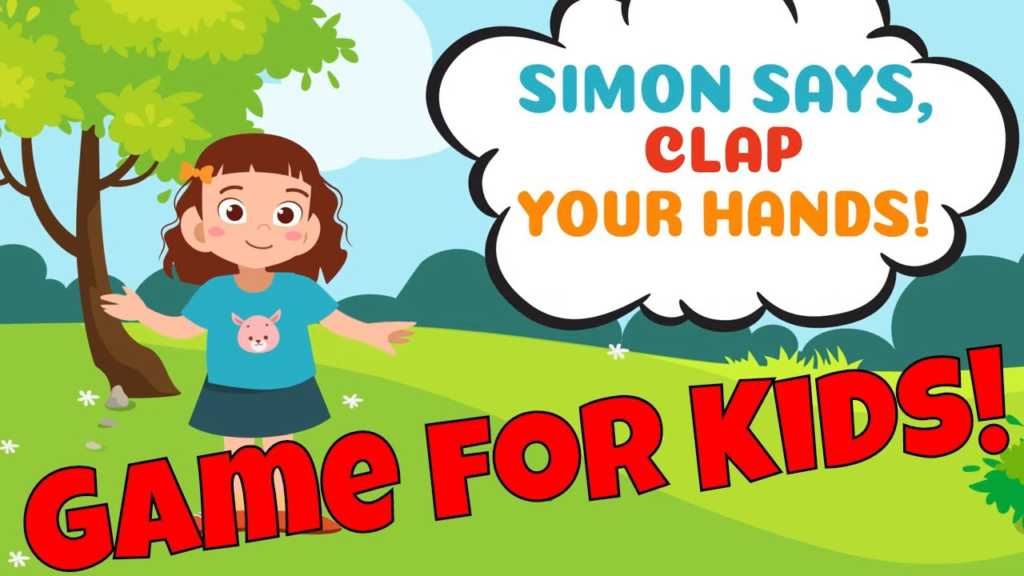
Simon Says Challenge is a listening and reaction game where players must follow commands only when they are preceded by the phrase “Simon says.” If a command is given without “Simon says,” players who follow it are eliminated. The last player remaining wins.
Core features at a glance:
| Feature | Description |
|---|---|
| Genre | Party / Listening game |
| Players | 2 or more (best with groups) |
| Core mechanic | Follow commands only after “Simon says” |
| Difficulty | Easy to learn, hard to master |
| Cognitive skills | Listening, inhibition control, reaction time |
| Platform | In-person or digital |
Why this game stands out:
| Differentiator | Benefit |
|---|---|
| No equipment needed | Play anywhere, anytime |
| Large group friendly | Works for 2 to 100+ players |
| Develops listening skills | Trains attention and impulse control |
| Infinite variety | Commands limited only by imagination |
| Cross-cultural | Known worldwide under various names |
| Ages 3 to adult | Truly all-ages fun |
Who is this game for?
- Teachers looking for classroom activities
- Parents seeking screen-free entertainment
- Party hosts needing group games
- Children developing listening skills
- Adults wanting a quick, fun challenge
The Origins of Simon Says
| Aspect | Detail |
|---|---|
| Origin | Unknown (ancient roots) |
| First recorded | 19th century England |
| Name origin | Possibly from “Simple Simon” nursery rhyme |
| Global variations | Many names worldwide |
Names Around the World
| Country/Region | Name | Meaning |
|---|---|---|
| USA/UK | Simon Says | Standard name |
| Germany | Kommando Pimperle | “Command Pimperle” |
| Spain | El Rey Manda | “The King Commands” |
| Mexico | Juan dice | “John Says” |
| France | Jacques a dit | “Jack Said” |
| Brazil | O mestre mandou | “The master ordered” |
Despite different names, the core rules remain remarkably consistent.
Classic Rules of Simon Says
Basic Setup
| Element | Detail |
|---|---|
| Leader | One person is “Simon” |
| Players | Everyone else follows commands |
| No equipment | Just players and a leader |
The Golden Rule
Players must only follow commands that begin with “Simon says.”
| Command Type | Should You Follow? |
|---|---|
| “Simon says touch your nose” | YES |
| “Simon says jump up” | YES |
| “Touch your nose” | NO |
| “Jump up” | NO |
Elimination
Players who perform an action without “Simon says” are eliminated. They sit out or are out of the game.
Winning
The last player remaining becomes the next Simon.
How to Play (Step by Step)
Step 1: Choose Simon
Select one player to be the leader (Simon).
Step 2: Simon Gives Commands
Simon calls out actions using the pattern:
- Valid: “Simon says [action]”
- Invalid: “[action]” (without “Simon says”)
Step 3: Players React
- For valid commands: players must perform the action
- For invalid commands: players must not perform the action
Step 4: Eliminate Mistakes
Anyone who performs an invalid command is out.
Step 5: Repeat
Continue until one player remains. That player becomes the next Simon.

Example Commands
Physical Movements
| Command | Difficulty |
|---|---|
| Touch your nose | Easy |
| Pat your head | Easy |
| Rub your belly | Easy |
| Jump up | Easy |
| Spin around | Medium |
| Hop on one foot | Medium |
| Stand on one leg | Hard |
| Touch your left ear with right hand | Hard |
Funny / Silly Commands
| Command | Appeal |
|---|---|
| Make a silly face | Children love |
| Quack like a duck | Funny |
| Wiggle your ears | Challenging |
| Pretend to sneeze | Interactive |
| Stick out your tongue | Playful |
Rapid-Fire Commands
For advanced play, Simon delivers commands quickly:
The rapid pace increases difficulty.
Winning Strategies for Players
Beginner Strategies
| Strategy | Why It Helps |
|---|---|
| Listen for “Simon says” | Do not act before hearing the phrase |
| Watch others | See if they fall for traps |
| Don’t rush | Take a moment to process |
| Start simple | Easy actions first |
Intermediate Strategies
| Strategy | Why It Helps |
|---|---|
| Anticipate traps | Expect commands without “Simon says” |
| Stay focused | Distractions cause mistakes |
| Use peripheral vision | Watch Simon while scanning others |
| Practice inhibition | Train yourself to pause |
Advanced Strategies
| Strategy | Why It Helps |
|---|---|
| Predict patterns | Learn Simon’s trick tendencies |
| Block out others | Don’t follow the crowd |
| Maintain composure | Panic leads to mistakes |
| Use rhythm | Some Simons have timing patterns |
Expert Strategies
| Strategy | Why It Helps |
|---|---|
| Mindfulness | Stay present, not ahead |
| Delayed reaction | Pause half-second before acting |
| Ignore social pressure | Don’t move because others move |
| Study the Simon | Learn their tells |
Strategies for Simon (The Leader)
| Strategy | Why It Helps |
|---|---|
| Vary your pace | Keeps players guessing |
| Use misleading gestures | Start to move while saying command |
| Chain commands | “Simon says touch nose, Simon says touch ears, touch chin” |
| Target specific players | Focus on those who are struggling |
| Speed up gradually | Increase pace as players eliminate |
Common Variations
Elimination Style
| Variation | Rule |
|---|---|
| Classic | Out players sit down |
| Last chance | One mistake allowed |
| Three strikes | Three mistakes before elimination |
Difficulty Levels
| Level | Rule Change |
|---|---|
| Easy | Simon says all commands clearly |
| Medium | Some commands without “Simon says” |
| Hard | Rapid-fire commands, many traps |
Themed Versions
| Theme | Example |
|---|---|
| Animal actions | “Simon says hop like a bunny” |
| Dance moves | “Simon says do the twist” |
| Exercise | “Simon says do a jumping jack” |
| Classroom | “Simon says raise your hand” |
Digital Version
The digital adaptation replicates the experience with:
- Visual commands on screen
- Timed responses
- Increasing speed
- Sound cues
Cognitive Benefits of Simon Says
| Skill | How the Game Develops It |
|---|---|
| Listening comprehension | Must process verbal commands |
| Inhibition control | Resist performing invalid commands |
| Processing speed | React quickly to valid commands |
| Attention | Maintain focus throughout |
| Working memory | Remember recent commands |
| Self-regulation | Control impulses |
These skills are valuable for:
- Classroom learning
- Social situations
- Academic performance
- Behavioral development
Why Simon Says Is Popular in Classrooms
| Reason | Benefit |
|---|---|
| No materials | Ready to play instantly |
| Any class size | Works for 5 or 35 students |
| Active learning | Gets kids moving |
| Inclusive | All abilities can participate |
| Transitions | Great for between activities |
| ESL/EFL | Teaches action vocabulary |
Teachers have used Simon Says for generations—for good reason.
Simon Says for Language Learning
For English language learners, Simon Says teaches:
| Language Element | Example |
|---|---|
| Body parts | “Touch your nose” |
| Action verbs | “Jump,” “sit,” “stand” |
| Prepositions | “Put your hand on your head” |
| Following directions | Essential classroom skill |
| Listening comprehension | Processing spoken English |
Frequently Asked Questions (FAQs)
1. Is Simon Says Challenge free to play?
Yes, both the traditional game and the digital version are free. The digital version may include occasional ads.
2. How many players do you need for Simon Says?
You need at least 2 players (one Simon, one follower). The game is best with 3 or more.
3. Can you play Simon Says alone?
No. Simon Says requires at least one leader and one follower.
4. What happens if Simon says something impossible?
Players should attempt the action. If truly impossible, Simon can choose a different command.
5. What if Simon forgets to say “Simon says”?
If Simon performs an action without saying “Simon says,” players do not follow. Simon is not eliminated for this mistake.
6. Can players question Simon?
Typically, no. Players follow commands without arguing. The game relies on Simon’s authority.
7. What is the best age for Simon Says?
Ages 3 to adult. Younger children may need simpler commands.
8. How long does a typical game last?
5-10 minutes per round, depending on player count and Simon’s trickiness.
9. Can Simon give multiple commands at once?
Yes, but only those following the “Simon says” pattern.
10. What if two players are eliminated simultaneously?
They both sit out. Continue with remaining players.
11. Is there a penalty for Simon’s mistakes?
No. Simon’s only “penalty” is that players don’t follow invalid commands.
12. Can players ask for clarification?
In standard rules, no. Listen carefully.
13. What if Simon moves while saying a command?
Gestures do not count. Only the verbal command matters.
14. Can the game be played competitively?
Absolutely. The goal is to be the last player remaining.
15. What is the difference between traditional and digital Simon Says?
| Aspect | Traditional | Digital |
|---|---|---|
| Leader | Human player | Computer |
| Commands | Spoken | On screen |
| Group play | Yes | Typically solo |
| Reaction time | Human-paced | Timed |
16. Why is it called Simon Says?
The name likely comes from the nursery rhyme character “Simple Simon.”
17. Can adults play Simon Says?
Yes. It is a popular party game for all ages.
18. Is there a time limit for responses?
Traditional version has no strict time limit. Digital versions may impose timers.
19. What makes a good Simon?
Clear speaking voice, good pace variation, and creative commands.
20. Why does the game improve listening skills?
Players must actively listen for the trigger phrase “Simon says” before acting, training attention and impulse control.
The Digital Version: What to Expect
The digital adaptation of Simon Says Challenge offers:
| Feature | Description |
|---|---|
| Visual commands | Actions appear on screen |
| Timed responses | React within time limit |
| Increasing difficulty | Faster commands as you progress |
| Sound cues | Audio feedback |
| Solo play | Play against the computer |
Note: The source indicates “Mobile Web Compatible: No.” Desktop play is recommended.
Simon Says as an Icebreaker
The game is excellent for:
- First day of school
- Party introductions
- Team building
- Youth groups
- Family gatherings
Why it works:
- Low pressure (everyone makes mistakes)
- Physical movement breaks tension
- Shared laughter creates bonding
- No special skills required
Conclusion: A Timeless Classic
Simon Says Challenge has entertained children and adults for generations because it is simple, engaging, and endlessly variable. The rules take seconds to explain, yet mastery requires genuine listening skill and impulse control. It works for large groups or small, for young children or adults, for classrooms or parties.
The digital version brings this classic into the modern era, allowing solo play against a computer opponent. But the true magic of Simon Says remains the in-person experience—the laughter when someone falls for a trap, the tension of rapid-fire commands, and the joy of being the last player standing.
Key takeaways:
| Aspect | Summary |
|---|---|
| Genre | Listening / party game |
| Players | 2+ (best in groups) |
| Core rule | Act only after “Simon says” |
| Difficulty | Easy to learn, challenging to master |
| Equipment | None |
| Cognitive benefits | Listening, inhibition, attention |
| Platform | In-person or digital (desktop) |
| Cost | Free |
| Verdict | A must-play classic for all ages |
Follow my steps and you are in the game. Have fun playing.